The WT-86-32-3ZW1 intelligent panel is a product based on the ESP32-S2-WROVER module that drives a 320×320 3.92 inch touch screen. The ESP module also handles wireless connectivity. It can be integrated into many intelligent products as a small and convenient intelligent panel. You can develop with ESP-IDF or Wireless-Tag's custom UI editor called 8ms.
WT-86-32-3ZW1 LVGL Demo
WT-86-32-3ZW1 earned Standard LVGL board certification which means users can be sure that it's easy to use this board with LVGL and they can expect decent performance and quality.
Buy now#
The WT-86-32-3ZW1 board can be purchased from Alibaba.
Specification#
Performance#
WT-86-32-3ZW1 uses an ESP32-S2-WROVER module which is based on one of the newer cores from Espressif. Its core runs at 240 MHz.
Frame rate (FPS)#
The WT-86-32-3ZW1 board reached 17 FPS on LVGL's certification benchmark. In the video, you can see that smaller changes were drawn quickly, and scrolling the list was smooth. However, the most complex part of the benchmark - the album cover with the zoom animation and the moving bars - caused some drop in FPS.
Memory#
The WT-86-32-3ZW1 board has an ILI9488 display controller that is connected to the ESP chip via an 8-bit I2S interface. The framebuffer is located in the ILI9488 so you need only smaller draw buffers for LVGL. These buffers can easily fit into the internal RAM.
As is usual with ESP32 chips, ESP32-S2-WROVER doesn't have internal flash. However, it has a large external flash (16 MB). The external flash is connected via an 80 MHz 4-line SPI interface to the chip. Compared to internal flash, this interface is quite slow. For code execution, this slowness is very well compensated with caches inside the chip. However, the cache doesn't help much if large (e.g. screen-sized) images need to be read.
PSRAM might have similar issues because it shares the same SPI bus with the flash.
To reach good performance, the assets (images and fonts) should be kept in internal RAM which is lightning fast. For comparison, the internal RAM has 240 MHz × 32 bit = 960 MB/s throughput while the PSRAM and flash have 80 MHz × 4 bit = 40 MB/s theoretical throughput, which is even smaller in real life due to some overhead in the communication and because both memories use the same bus.
Regardless of the bandwidth issues, the huge PSRAM can be used for various purposes. For example, it can store a large canvas for custom drawings (e.g. a special chart) which is later used in LVGL, or any other data independently of LVGL.
Quality#
Display#
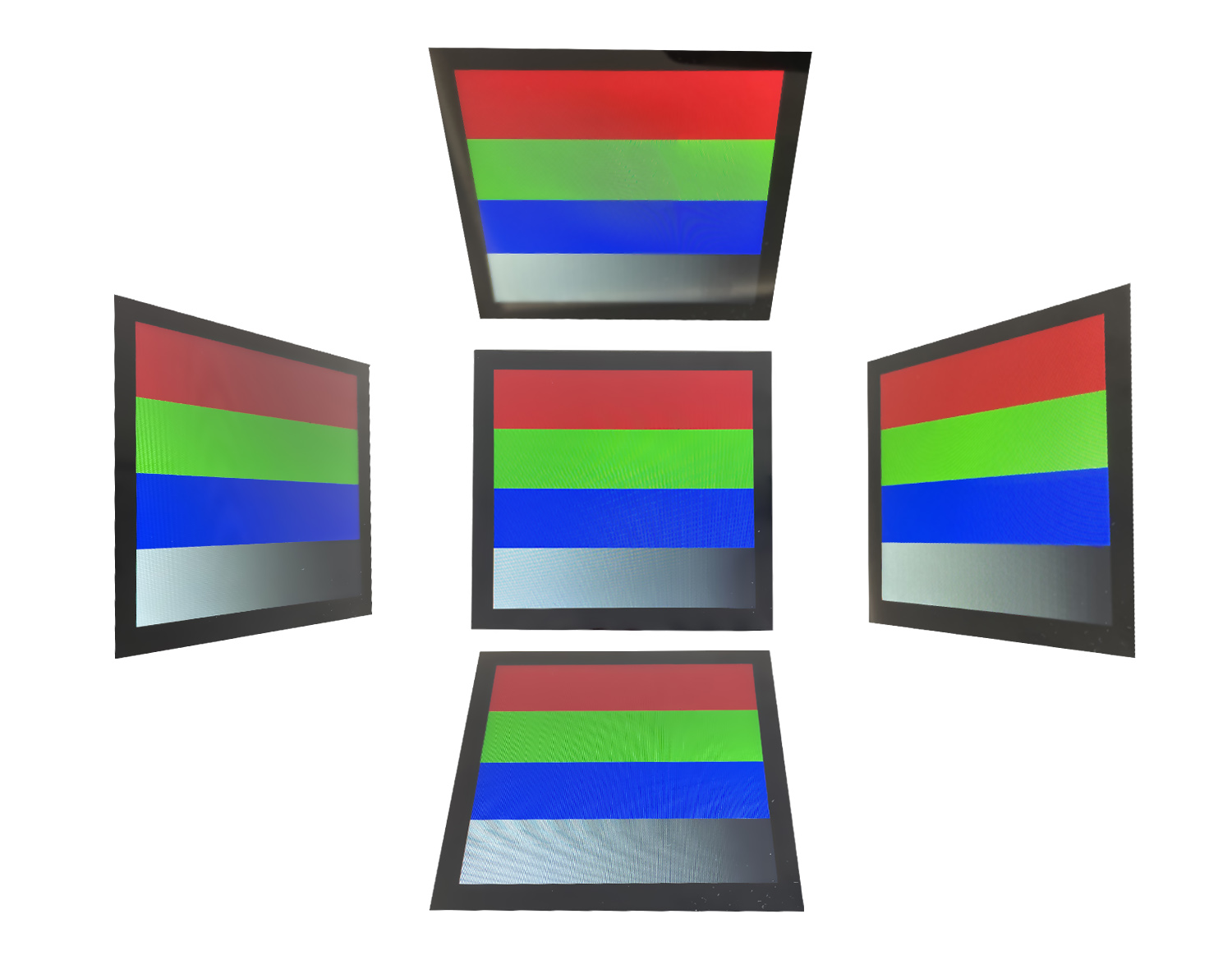
This board comes with an IPS display that has great viewing angles but only average pixel density.
Touchpad#
The display is equipped with a capacitive touchpad. Therefore it recognizes touches with good precision and provides a smartphone-like experience. The drawback is that the touchpad cannot be used with gloves or with a pen.
Robustness#
WT-86-32-3ZW1 is designed to be placed into an end product. The display is precisely placed into a plastic case that has screws at the back to connect wires.
Development#
With Wireless-Tag products you can develop in 2 different ways:
Build#
A getting started project can be found on GitHub.
Development with this board is like standard ESP development. You can set up the development environment as described in the documentation from Espressif, use menuconfig to configure the project, and build with idf.py.
Editor#
Wireless-Tag's online editor is available at 8ms.xyz. It's a drag and drop editor allowing you to create UIs without writing a single line of code. Besides easily putting together a UI, you can use Blockly to implement the business logic.
After signing up and logging in, click the red "Workbench" button on the right corner.

After clicking the "New" button on the right, select "ESP32" and "ESP32WT-86-32-3ZW1" hardware.
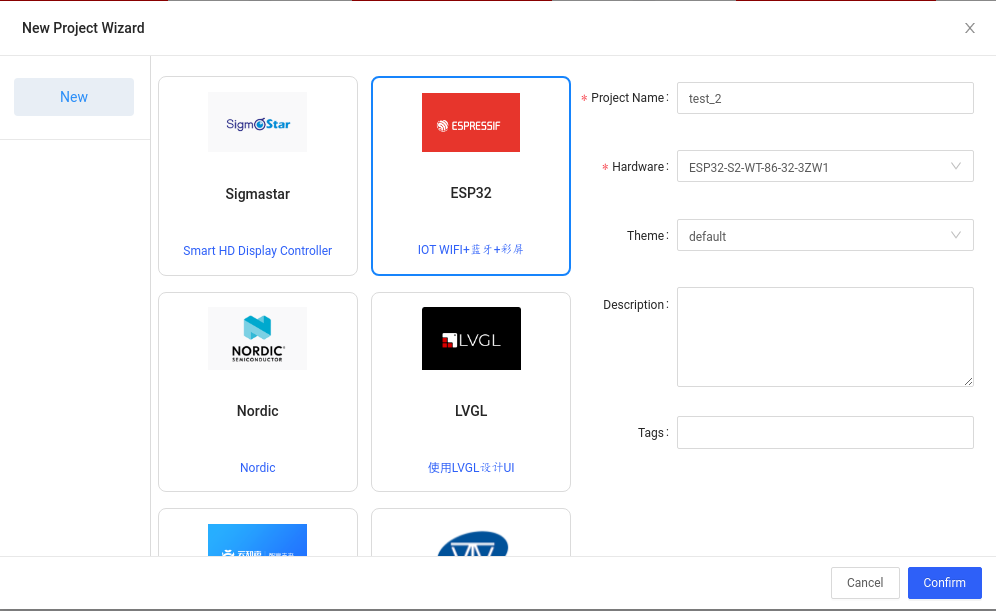
Click confirm and you are ready to play with the UI.
In the "Layout" menu you can select "Blockly" to add some logic too.
From the "Compile" menu you can download the binary, the source code, or start an online preview.
Conclusion#
The WT-86-32-3ZW1 is a compact product which is a great choice for IoT devices where WiFi and UI with moderate complexity is required. Due to the 8ms editor, you don't need to be a professional developer to get started with this product.