The Elecrow ESP Terminal 3.5" is a microcontroller based on the ESP32-S3 master. It features a Xtensa 32-bit LX7 dual-core processor with a main frequency of up to 240 MHz, supports 2.4 GHz Wi-Fi and Bluetooth 5 (LE), and can easily handle common edge terminal device applications such as industrial control, agricultural production environment detection, smart home scenarios, and more.
This terminal has a 3.5-inch parallel RGB interface capacitive touch screen with a resolution of 480x320 that delivers smooth output at 60 FPS. On the back, there are 4 Crowtail interfaces that work with Elecrow's Crowtail series sensors for plug-and-play integration. It also includes an SD card slot for extended storage (SPI) and a buzzer function. The board supports both ESP-IDF and Arduino IDE development.
Elecrow ESP Terminal 3.5 inch LVGL Demo
ESP Terminal 3.5" earned Standard LVGL board certification, which means users can be sure that it's easy to use with LVGL and can expect decent performance and quality.

Buy now#
The ESP Terminal 3.5" board can be purchased from Elecrow's shop.
Specification#
Performance#
ESP Terminal 3.5" uses the dual-core ESP32-S3 chip. With it, you can dedicate one core to the UI and the other core to the application.
Frame rate (FPS)#
The ESP Terminal 3.5" board reached 26 FPS on LVGL's certification benchmark. The animated stripes and scaling cover rendered at approximately 23 FPS. Even the animations of the screen-sized stripes at the beginning were smooth. In general, the performance is stable and absolutely suitable for most applications.
Memory#
The board comes with huge external flash and RAM. Since ESP32-S3 has Octo-SPI to access the memories, the bandwidth is much better than with the previous ESP chips.
The PSRAM is big enough to let you use as many frame buffers as you wish. Plus, the flash storage is even bigger and can hold a ton of content. For instance, in the 16 MB of flash storage you can store about 36 full-screen images.
Quality#
Display#
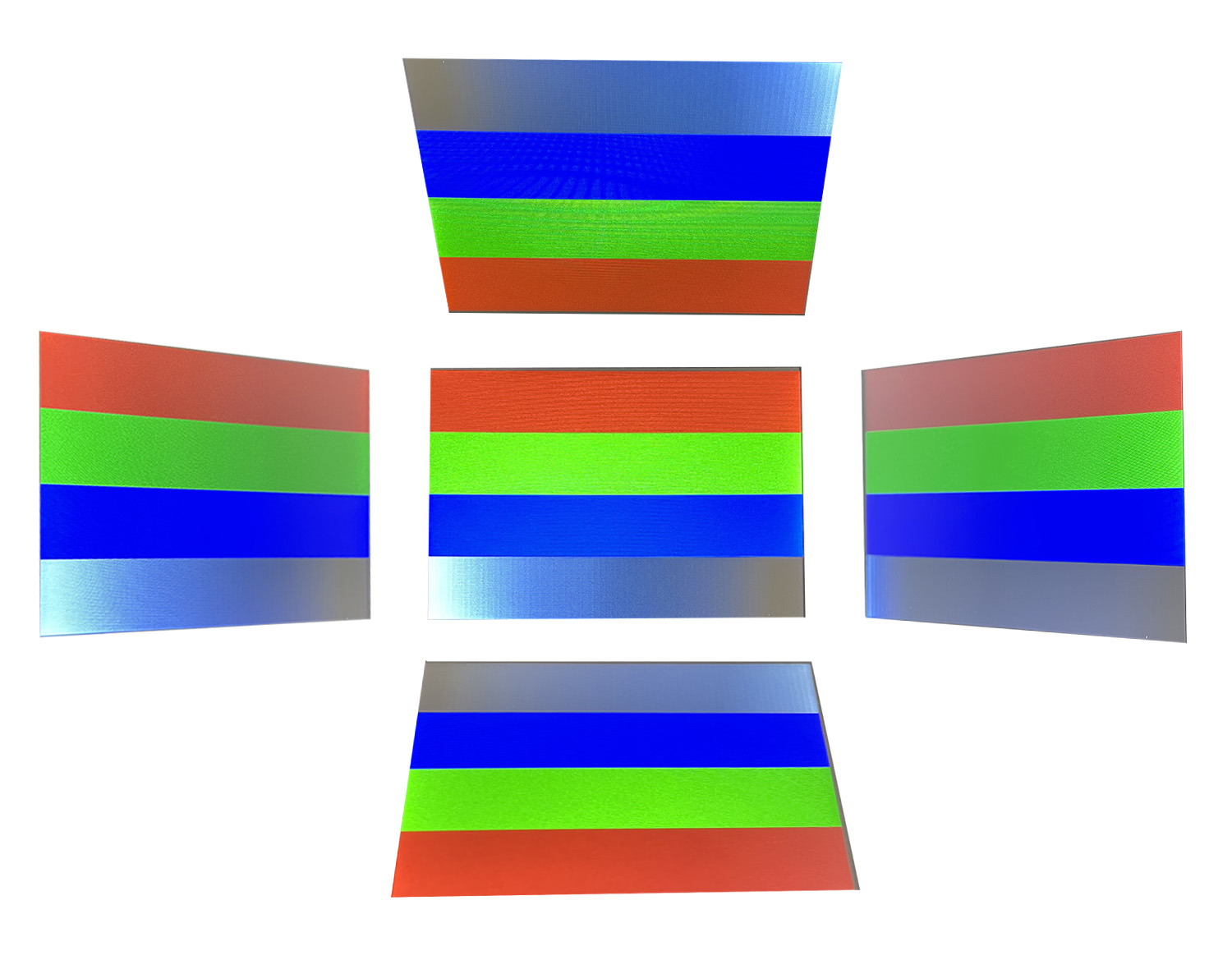
This board comes with a TN display. Its viewing angle is not as good as an IPS display, but it's probably suitable for a lot of applications.
Touchpad#
The display is equipped with a capacitive touchpad. Therefore, it recognizes touches with good precision and provides a smartphone-like experience. The drawback is that the touchpad cannot be used with gloves or with a pen.
Robustness#
ESP Terminal 3.5" comes with a nice and robust case. Thanks to it, the ESP Terminal 3.5" board can be built into products as well.
Development#
Elecrow supports Arduino for ESP Terminal 3.5". It has the advantage that you can use the rich Arduino ecosystem and leverage the huge Arduino community.
To get help, you can also use the Forum of Elecrow.
Elecrow has a great Wiki page about ESP Terminal 3.5". On this page, you can find all the information to get started.
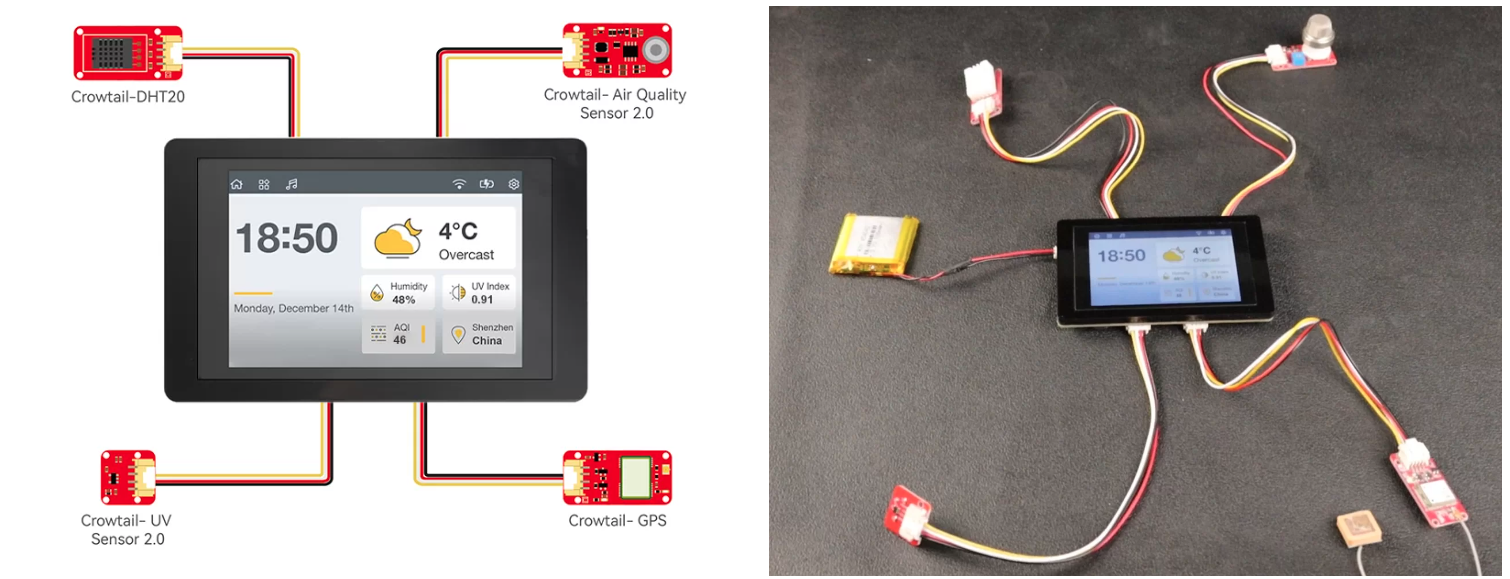
For Crowtail interfaces, you can find 100+ sensors and other modules to extend the features of the board. These images show how to put together a smart home application from Crowtail modules:
The only issue we have found is that the board cannot be debugged. Of course, debugging with printf is always an option as a workaround.
Conclusion#
A powerful chip, a lot of fast memory, a robust case, Arduino support, and decent performance. Well, what else can I say? Recommended!