The Apollo4 Blue is a microcontroller chip developed by Ambiq Micro, purpose-built for battery-powered endpoint devices including smartwatches, fitness bands, and wearables. Built on the 32-bit Arm Cortex-M4 core with FPU, it features up to 2MB of MRAM and 1.8MB of SRAM. With this compute power and storage, it can handle complex algorithms and neural networks while displaying vibrant, smooth graphics. The DASQI Apollo4B board showcases a stunning 454x454 round AMOLED display with capacitive touch, SD card slot supporting LVGL file system interface, RTK GPS, accelerometer, gyro, e-compass, barometer, current sensor, and I2C/SPI/UART/MIPI interfaces.
DASQI Apollo4B LVGL Demo
Apollo4B earned Standard LVGL board certification, which means users can be sure that it's easy to use with LVGL and they can expect decent performance and quality.

Buy now#
The Apollo4B board can be purchased directly from DASQI via the form at https://dasqi.com/apollo4b/.
Specification#
Display Details#
- Resolution 454x454
- Display size 1.39"
- Color depth 16-bit RGB565
- Technology AMOLED
- DPI 460 px/inch
- Touch pad Capacitive
Power#
- Power supply USB Type-C (5V)
Performance#
Frame rate (FPS)#
The Apollo4B board reached 22 FPS on LVGL's certification benchmark. In the video, you can see that smaller changes were drawn quickly, and scrolling the list was smooth. However, the stripes jumping on the rhythm of the music and scaling of the cover image worked with approximately 17 FPS.
Memory#
The chip is equipped with 2MB of MRAM (a non-volatile memory similar to flash). It's enough to store the code of the UI and application, plus some assets, but if you need many images or large fonts, an external flash will likely be required.
On the other hand, the internal 1.8MB SRAM is quite generous. Two full frame buffers will use only 50% of the RAM.
If you need extra memory, the chip has memory interfaces that make it possible to add external RAM and flash.
Quality#
Display#
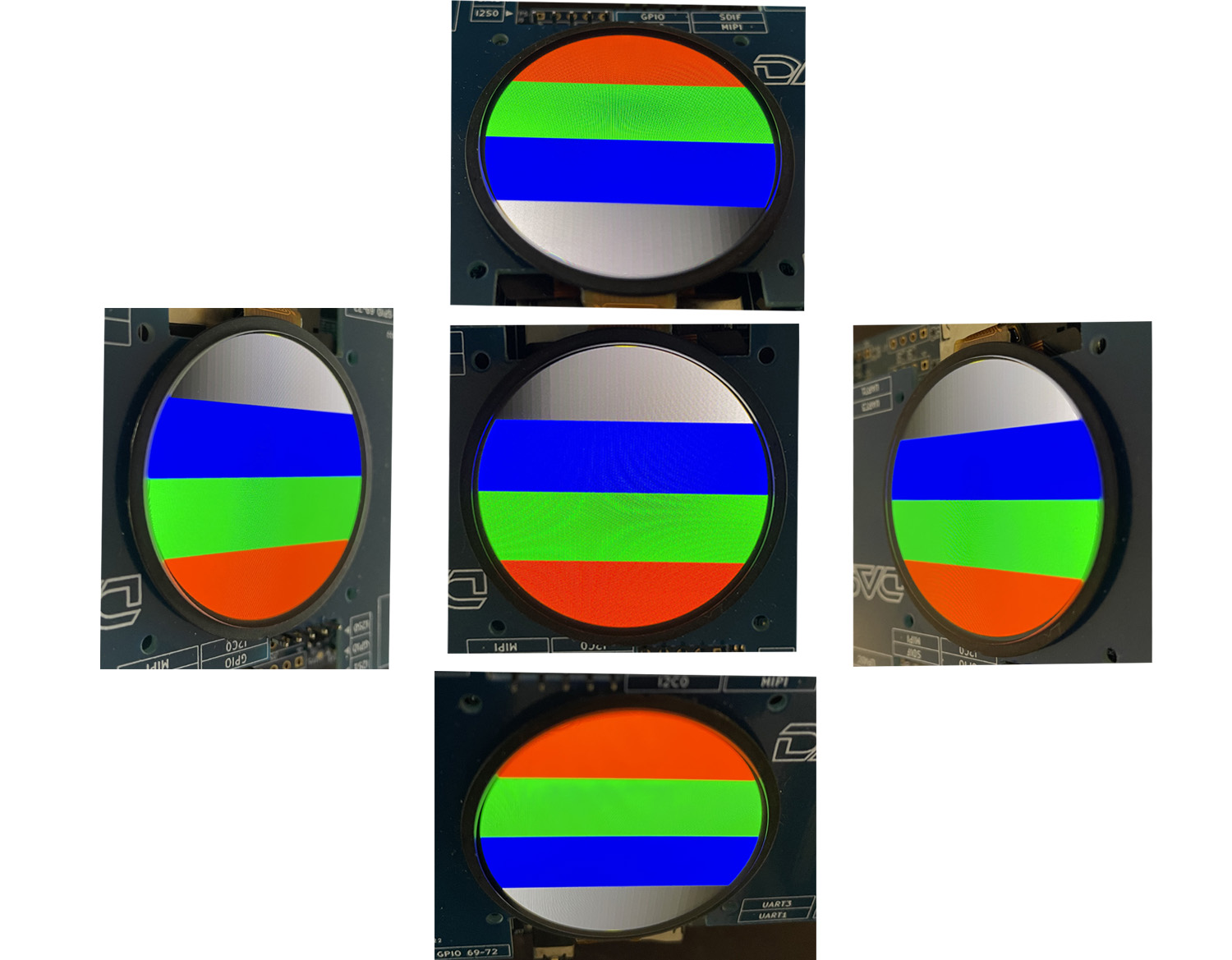
This board comes with an AMOLED display and exceptional 460 dpi pixel density. The quality of the display is simply amazing.
Touchpad#
The display is equipped with a capacitive touchpad, so it recognizes touches with good precision and provides a smartphone-like experience. The drawback is that the touchpad cannot be used with gloves or a pen.
Robustness#
Apollo4B is a development board, not intended to be placed in an end product. Regardless, it's quite robust.
Development#
DASQI recommends the Keil MDK IDE to develop projects. They've provided the required getting started materials at https://github.com/DASQI-CORP/apollo4bplusv10.
For more information, visit https://dasqi.com/apollo4b/
Conclusion#
The DASQI Apollo4B board is a compact product with many sensors and peripherals to explore. It's clearly designed for smartwatch applications. Its display is fantastic and can compete with commercial smartwatches on the market. The performance of the board is solid - you can accomplish great things with it, though for complex animations and transformations the FPS can drop below 15.