It started with a simple spark of curiosity and a heavy dose of frustration.
I bought the DT78 smartwatch, but I didn't just want to change the watch face. I wanted to own the entire experience. My goal was to wipe it clean and build my own firmware from scratch.
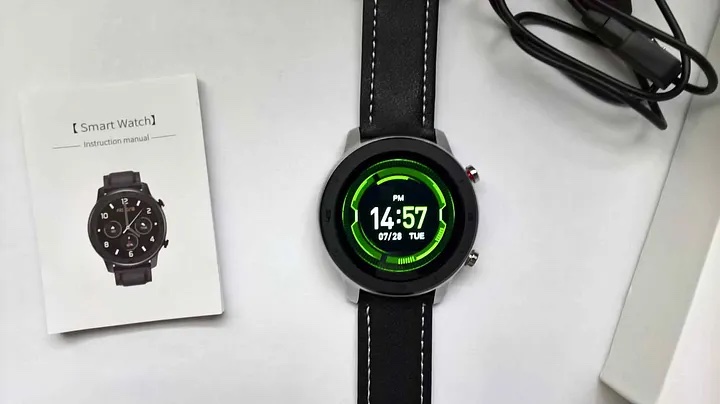
Then I hit the wall: vendor lock-in.
The MCU inside was a black box. No SDK, no documentation, no community. I even reached out to the manufacturer directly. Their response was simple:
I could have the SDK if I ordered one million units.
As a solo hobbyist, that was not happening. So instead of trying to unlock the system, I decided to replace it.
August 2021: The Frankenstein Prototype#
If I couldn't use their hardware, I would build my own around it.
I took the watch apart and performed what felt like a full transplant:
- Removed the original motherboard
- Wired the LCD directly to an ESP32
- Soldered a 0.3 mm pitch FPC connector using tiny earphone wires
It was fragile, messy, and completely impractical. But it worked.
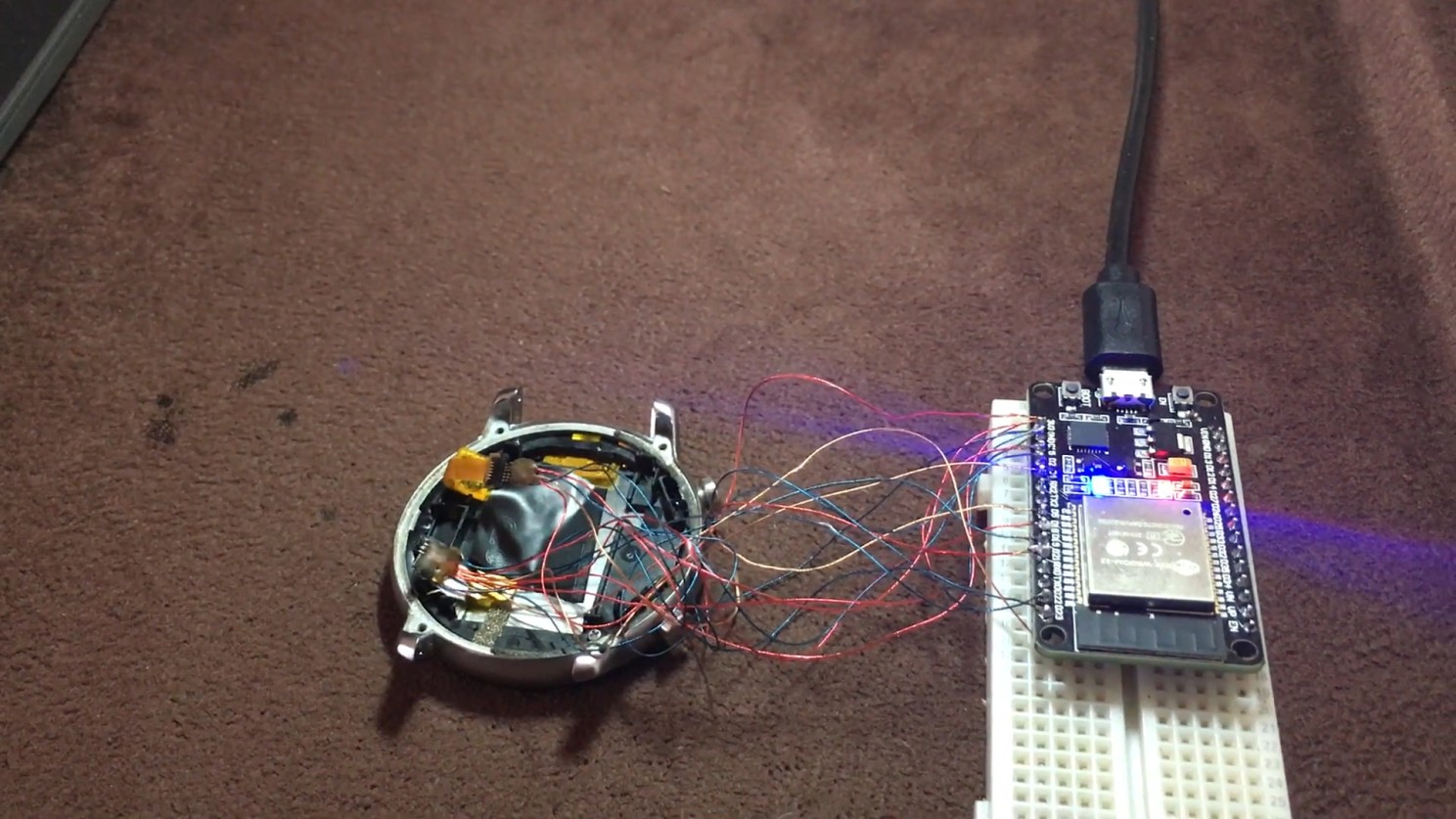
A few weeks later, I designed a custom ESP32-based PCB that could actually fit inside the watch case. It wasn't a perfect wearable, and battery life was far from ideal, but that wasn't the point.
This became my sandbox. A place where I could experiment freely and learn by building. (The reverse-engineering notes live in the dt78 repository.)
July 2022: The UI Breaking Point#
Once the hardware worked, I ran into the next challenge: building a usable interface.
I was using the Arduino GFX library. It could draw shapes and text, but everything felt low-level and rigid. No anti-aliasing, no layout system, no real UI abstraction.
At one point, I even built a full keyboard manually. Each key was just a bounding box. Every touch had to be checked against coordinates. It worked, but it was clear this approach wouldn't scale.
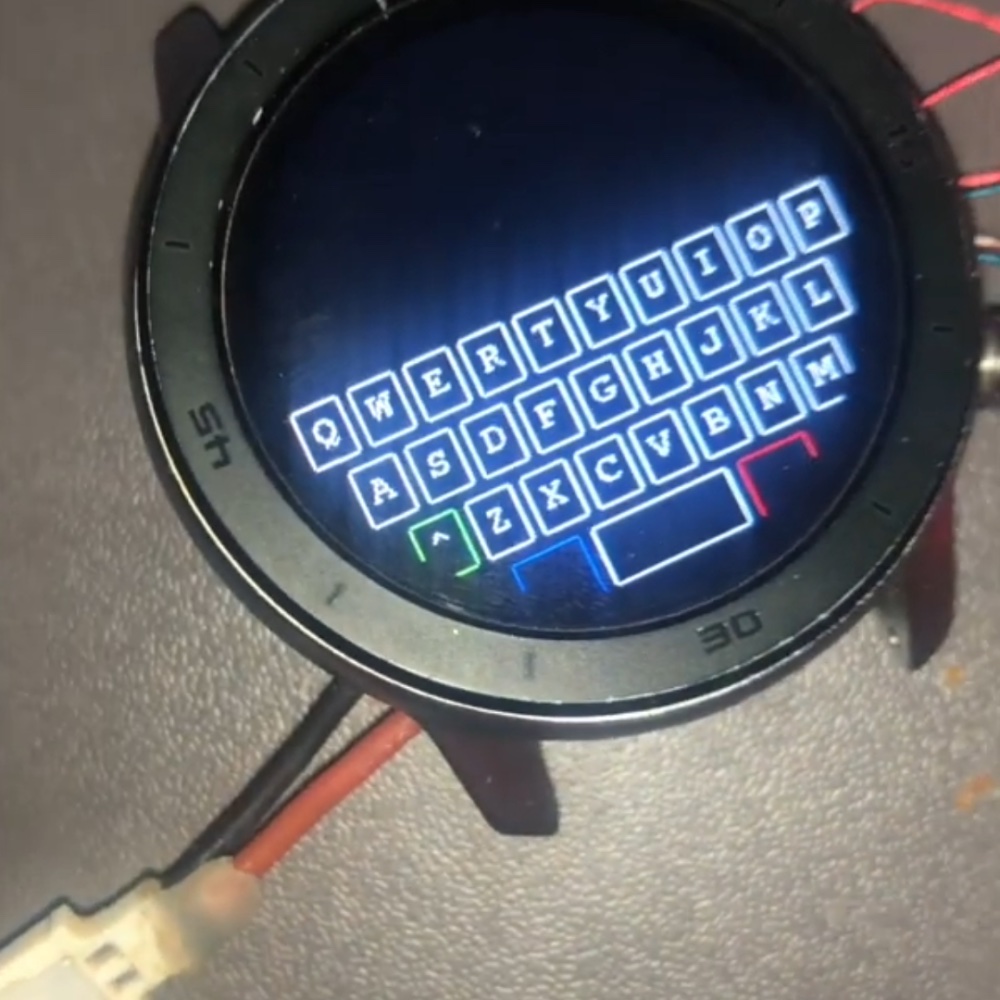
That's when it clicked. If I wanted to build something that felt like a real product, I needed something more than a graphics library.
July 2022: Discovering LVGL#
Later that month, I found LVGL, and everything changed.
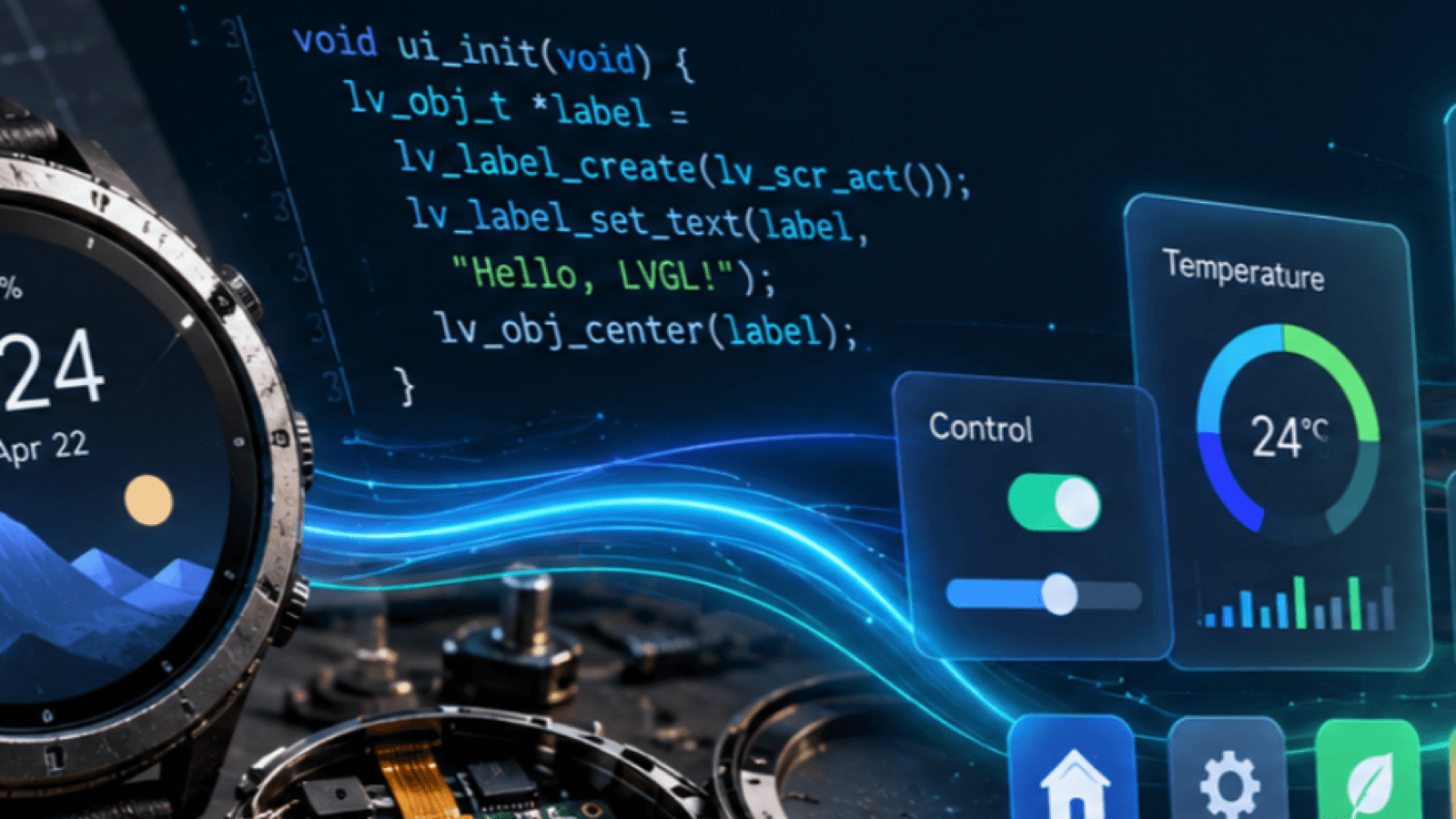
LVGL had everything I had been trying to build from scratch: layouts, styling, event handling, and reusable components. It shifted my mindset from drawing pixels to designing interfaces.
I stopped thinking in coordinates and started thinking in structure and design.
From that point on, LVGL became the foundation of my work.
I started building watch-style interfaces on ESP32 and other open platforms. Most weren't practical wearables due to power consumption, but they didn't need to be. They were experiments, each one pushing a bit further.
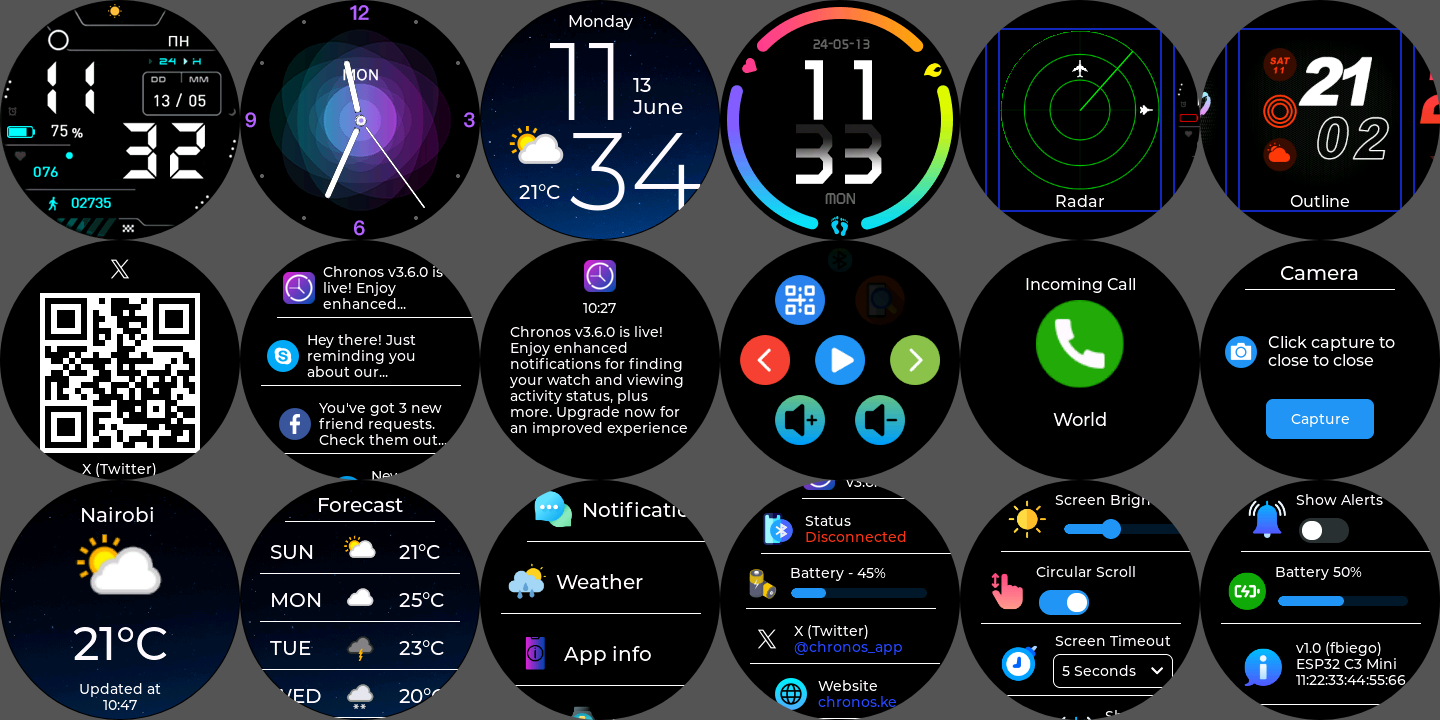
One of the most notable was the ESP32-C3 Mini UI, an almost complete smartwatch interface built with LVGL. For me, it was less about the end product and more about exploring what was possible on constrained hardware.
From Experiments to Opportunities#
As I kept building, I started sharing my work.
What began as small experiments gradually turned into more refined demos and projects. Over time, they started reaching a wider audience, opening doors I hadn't expected.
I remember buying an LCD board from AliExpress just to experiment with. I built an LVGL demo, shared the results, and didn't think much of it. To my surprise, the manufacturer reached out and offered me an upgraded version of the board for free.
That was just the beginning.
Since then, I've had the opportunity to collaborate with several hardware manufacturers who have sent me development boards and displays to experiment with. This has allowed me to explore different hardware platforms, try out new technologies, and showcase what LVGL can achieve across various devices.
I'm especially grateful to the manufacturers who have supported my projects along the way:
- VIEWE
- M5Stack
- Elecrow
- HW Media Lab LLC
- Waveshare
- PanelLan
Their support has made it possible to keep experimenting, learning, and sharing new projects with the embedded community.
What started as a hobby gradually became a cycle of building, sharing, learning, and improving. Along the way, I connected with more people in the embedded community, including the LVGL team, without realizing just how far those connections would eventually take me.
Chronos: Extending the Idea#
At the same time, the journey expanded beyond building custom hardware.
The same watch that started everything also inspired Chronos, a companion app designed to work with existing off-the-shelf watches. Instead of replacing firmware, Chronos extends what these devices can do from the outside.
Alongside that, I built the ChronosESP32 Arduino library to support DIY watch projects, making it easier to interface with similar hardware and experiment with custom builds.
This created two parallel paths: one focused on building custom devices with LVGL, and another focused on enhancing existing devices through software.
December 2024: Full Circle#
Roughly two and a half years after discovering LVGL, the journey came full circle. I joined the LVGL team.
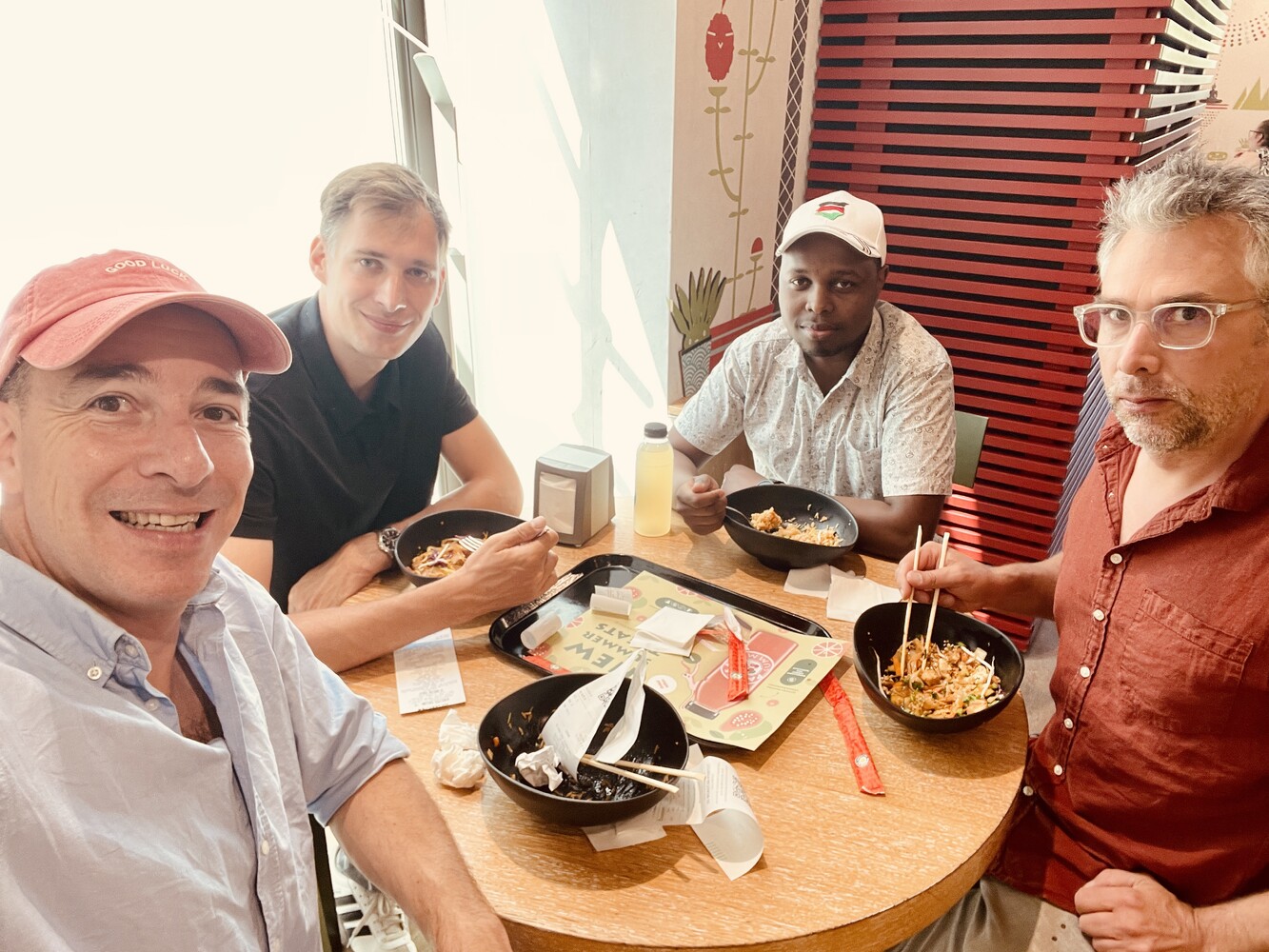
Looking back, it wasn't a single moment that led there. It was the accumulation of everything: the experiments, the projects, the shared demos, and the collaborations along the way.
Today, my work focuses on bridging the gap between design and implementation.
I help turn static UI designs into production-ready interfaces using LVGL Pro. That includes structuring scalable UI architectures, optimizing performance for constrained hardware, and ensuring that interfaces translate well across different devices and screen sizes.
I also contribute to improving developer workflows and patterns, helping teams build interfaces that are not just functional, but maintainable and efficient.
Being on the inside changed my perspective.
LVGL is no longer just a library. It has grown into a complete ecosystem:
- LVGL Open provides the core open-source foundation
- LVGL Safe targets safety-critical and certified environments
- LVGL Pro enables professional, production-ready UI development
Seeing how all these pieces fit together has been one of the most rewarding parts of the journey.
Looking back, that modified DT78 was never really about building the perfect smartwatch.
It was about learning, experimenting, and asking a simple question:
What if I just replaced everything?
That question changed everything.